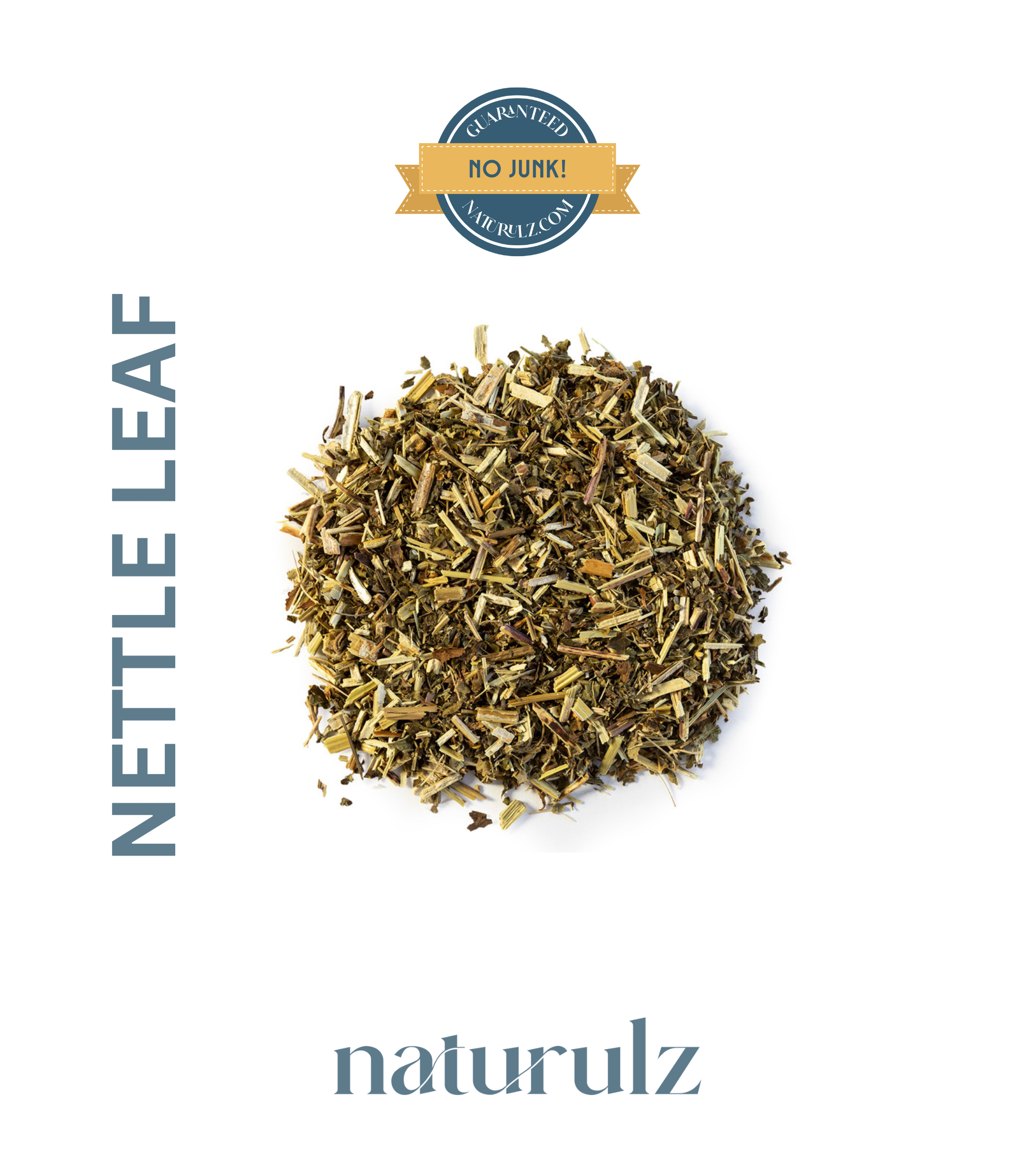
Nettle Leaf
Stinging nettle (Urtica dioica) has been a staple in herbal medicine since ancient times.
Ancient Egyptians used stinging nettle to treat arthritis and lower back pain, while Roman troops rubbed it on themselves to help stay warm.
Its scientific name, Urtica dioica, comes from the Latin word uro, which means “to burn,” because its leaves can cause a temporary burning sensation upon contact.
The leaves have hair-like structures that sting and also produce itching, redness and swelling.
However, once it is processed into a supplement, dried, freeze-dried or cooked, stinging nettle can be safely consumed. Studies link it to a number of potential health benefits.
Stinging nettle’s leaves and root provide a wide variety of nutrients, including:
Vitamins: Vitamins A, C and K, as well as several B vitamins.
Minerals: Calcium, iron, magnesium, phosphorus, potassium and sodium.
Fats: Linoleic acid, linolenic acid, palmitic acid, stearic acid and oleic acid.
Amino acids: All of the essential amino acids.
Polyphenols: Kaempferol, quercetin, caffeic acid, coumarins and other flavonoids.
Pigments: Beta-carotene, lutein, luteoxanthin and other carotenoids.
Click to Learn more